
The Moment You Notice Something's Off
It usually starts small. You hit the opener button and the door hesitates for a second before it lifts, or it jerks instead of gliding. Maybe you hear a sharp pop from overhead, or notice the door looks slightly crooked as it closes, one side dropping faster than the other. None of these things stop you from using the door that day. But they're the first signs that a spring is wearing out, and springs don't usually fail with a warning shot — they fail all at once, under full tension, which is why it matters to catch the signs early rather than wait for the snap.
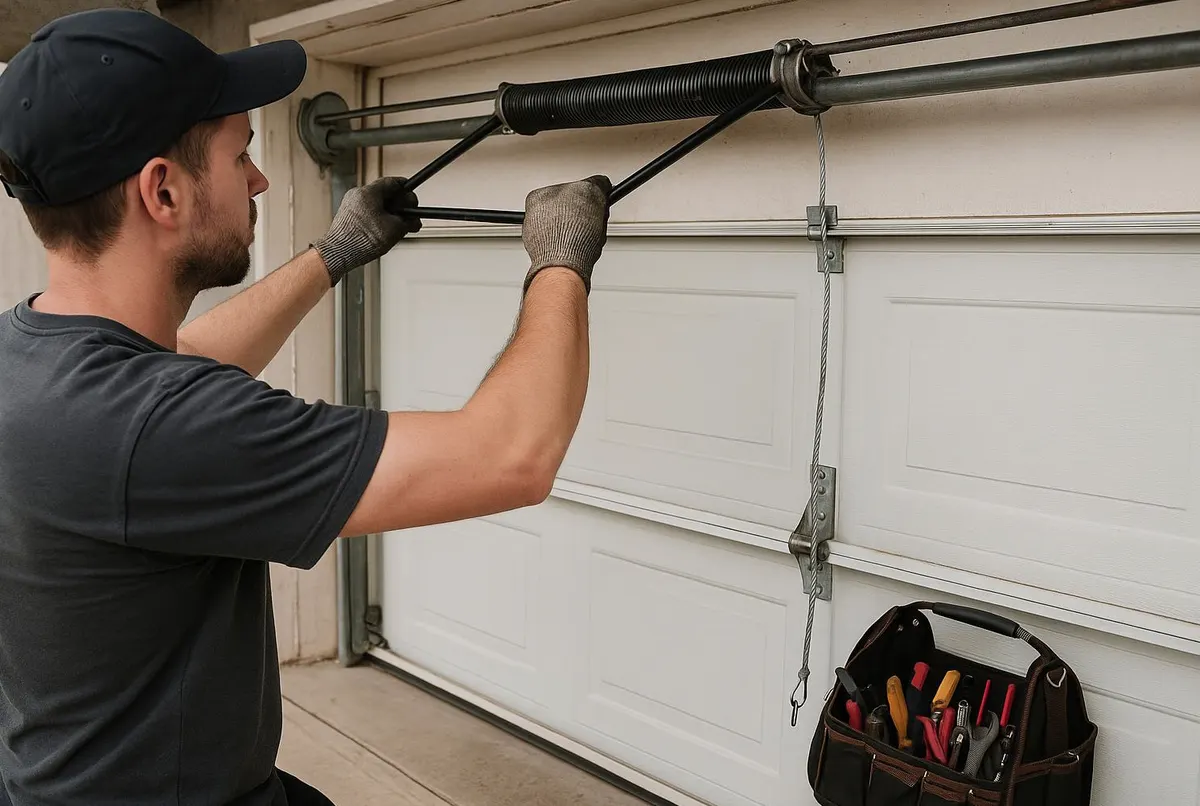
Garage doors use one of two spring systems: torsion springs, mounted on a bar directly above the door, or extension springs, which run along the horizontal tracks on either side. Both do the same job — counterbalancing the weight of the door so the opener isn't doing all the lifting — and both wear out the same way, gradually losing tension until they finally give out.
A Walk-Through Checklist for Your Garage
1. Listen to the door as it opens
Stand in the garage and run the door through a full open-close cycle. A healthy door moves smoothly and at a steady speed. If you hear grinding, popping, or a sudden loud bang partway through the cycle, that's often a spring coil shifting or a strand inside an extension spring starting to give.
2. Watch for uneven lifting
If one side of the door rises faster than the other, or the door tilts as it opens, one spring is likely weaker than its partner. Springs are almost always replaced in pairs for this reason — even if only one has visibly failed, the other is usually close behind from the same amount of wear.
3. Check the gap in a torsion spring's coils
With the door closed, look at the torsion spring above the door. The coils should sit close together with minimal daylight between them. A wide, uneven gap between coils is a sign the spring has stretched and lost tension, even if it hasn't broken.
4. Disconnect the opener and test the balance
Pull the release cord so the door is no longer connected to the opener, then lift it by hand about halfway. A door with good spring tension will stay in place on its own. If it drops on its own or feels unusually heavy, the springs are no longer doing their job and the opener has been compensating for it, often for longer than you'd expect.
5. Look for rust and flaking
This one matters more here than in drier climates. Months of rain and damp air settle into garages that aren't fully sealed, and condensation collects on cold metal even when the weather outside looks fine. Rust weakens spring steel from the inside, making it brittle rather than flexible, and it often shows up first as orange flaking or a rough, pitted surface on the coils.
6. Inspect the cables on an extension spring system
Extension springs work alongside safety cables that run through their center. Frayed strands, kinks, or a cable that looks stretched thin are signs the spring itself is also under more strain than it should be. A snapped cable with no safety backup lets the spring and door drop hard and fast.
7. Notice if the opener is working harder
An opener motor that strains, clicks repeatedly, or takes longer to lift the door than it used to is often compensating for a spring that's lost tension. This extra load shortens the lifespan of the opener itself, so a weak spring can end up costing you twice.
8. Count the years and the cycles
Most residential springs are rated for a certain number of open-close cycles, which works out to roughly seven to ten years of typical household use. If your springs are original to a door that age or older, visible wear is less the question than how soon.
Why This Matters More Heading Into Winter
Cold temperatures make steel slightly more brittle, and the mix of overnight chill with damp, humid air is exactly the kind of cycle that accelerates rust on a spring that's already under constant tension. Add in the occasional wind storm that rattles a door on its tracks, and a spring that's already borderline worn has less margin before it fails. Running through this checklist before winter settles in gives you a chance to catch a weak spring while it's still an inspection, not an emergency repair after dark in the rain.
When to Call Lynnwood Garage Door Pro
If you've gone through this checklist and noticed coil gaps, rust, uneven balance, or a door that's started sounding different, it's time to have it looked at before the spring fails on its own schedule. Garage door springs are under extreme tension and aren't a safe DIY repair — our technicians handle spring replacement safely, matching the correct torsion or extension spring size and weight rating to your specific door. If you're not sure whether it's the springs or something else entirely, our garage door maintenance & tune-up service includes a full inspection of springs, cables, rollers, and balance so you know exactly what's wearing out and what still has life left in it.
If your garage door in Lynnwood, WA is starting to sound or move differently than it used to, give Lynnwood Garage Door Pro a call before it leaves you stuck. We'll take a look, explain exactly what we find, and get it fixed right the first time.