
What the technician usually finds
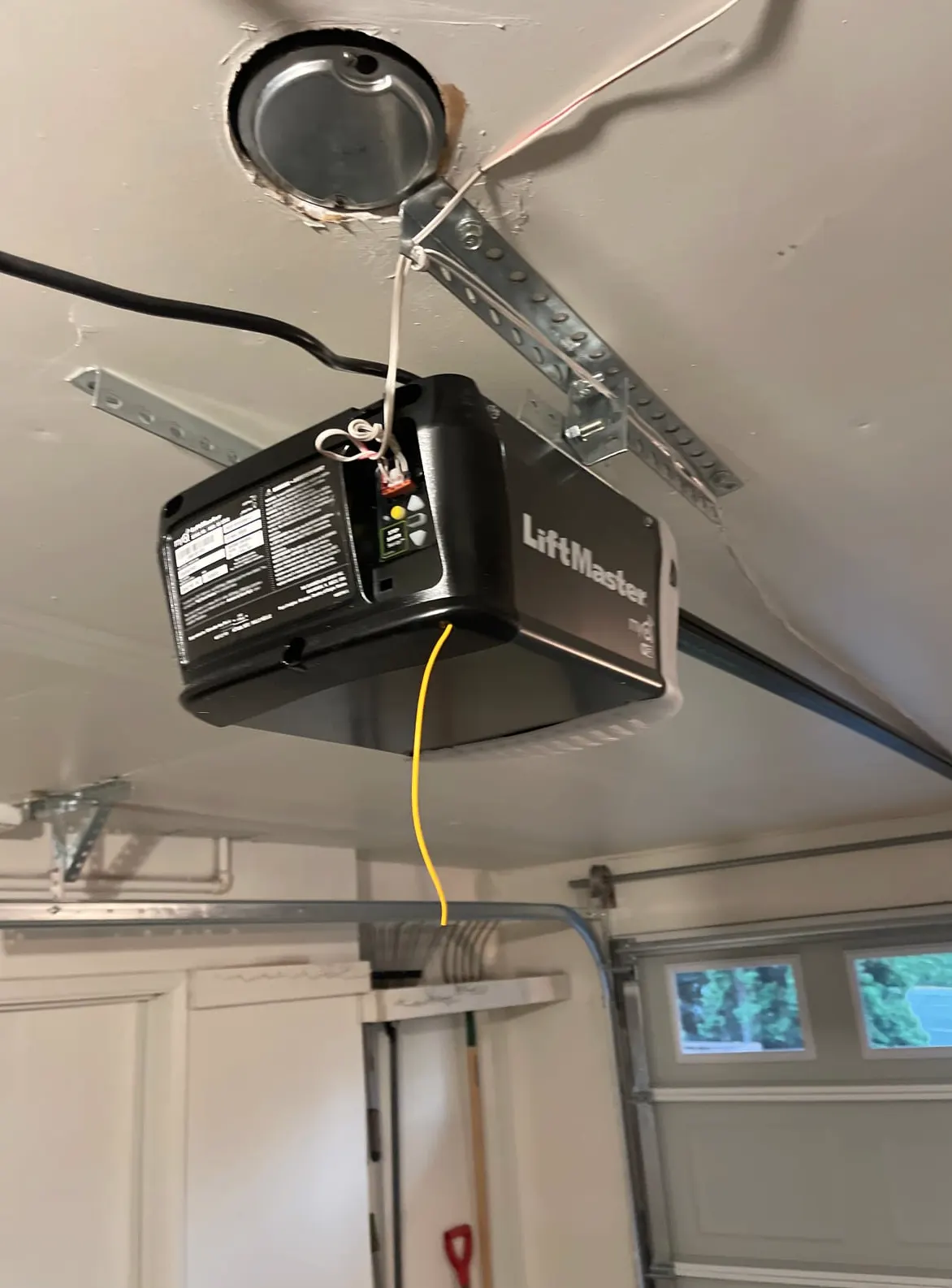
We get called out a lot this time of year for a door that "used to work fine" and now reverses halfway down, bangs on the floor instead of closing gently, or stops short of fully opening. Nine times out of ten, when we ask what's been tried already, somebody mentions turning up the force dial on the opener. Often it's one spouse's fix, the other spouse's suspicion that something's wrong, and neither one is completely sure what that dial actually does. So let's settle it.
Force and travel limits are two different jobs
An opener has to know two separate things: how far to travel, and how hard to push or pull to get there.
- Travel limits tell the opener exactly where the door should stop — how far up for fully open, how far down for fully closed. Set correctly, the door stops flush with the floor on the way down and fully retracts on the way up without straining the track.
- Force settings tell the motor how much resistance it's allowed to push through before it decides something is blocking the door and reverses direction. This is the setting built in for safety — so the door doesn't keep pressing down on a bike, a pet, or a person's foot.
They work together, but they are not interchangeable fixes. If the travel limit is off, the door stops in the wrong spot. If the force is set wrong, the door either gives up too easily or pushes through resistance it shouldn't.
Why cranking up the force is the wrong move
Here's the argument in a nutshell: the door seems to struggle to close, so one person's instinct is to turn up the force until it "just works." That does make the symptom go away — for a while. But it doesn't fix whatever was causing the resistance in the first place. It just gives the motor enough muscle to force the door through it.
That resistance is usually one of a few things: a roller that's binding, a track that's slightly out of alignment, a spring that's lost tension and is making the opener do work it was never meant to do, or — very common around here — a door jamb that's swollen from weeks of rain and is pinching the track at the bottom. Turning up the force doesn't solve any of that. It just teaches the opener to muscle through a problem that will keep getting worse, putting extra stress on the cables, hinges, and panels every single cycle.
Over months, that added stress shows up as bent track, frayed cable strands, a stripped opener gear, or a door that slams the last few inches instead of settling into place. The dial made the symptom disappear from your daily experience, but the underlying wear kept compounding.
The bigger issue: it's also a safety setting
Openers are designed to reverse direction when they meet resistance beyond a safe threshold, specifically so the door won't keep pressing on something — or someone — in its path. When the force is set too high to cover up a mechanical problem, that safety reversal stops doing its job reliably. The door may not kick back the way it should if it meets real resistance, which is exactly the scenario the setting exists to prevent.
A simple way to check: lay a 2x4 flat on the ground, centered where the door closes. Run the door down. It should reverse the instant it touches the board. If it keeps pushing, or barely taps it and reverses too easily on a door that otherwise closes fine, the force is out of balance and it's worth having it looked at rather than adjusted by trial and error.
Where the wet months make this worse
Garage doors around here deal with months of rain, damp, and the occasional ice storm, and wood trim and jambs respond to that by swelling slightly, then drying and shrinking again. A door that closes smoothly in August can develop a slight bind in November simply because the frame around it moved. If the opener's force was already set a bit high to cover an older issue, that seasonal swelling can be the thing that tips it into real strain on the hardware — right when ice or wind storms are also putting extra load on the door itself.
When to call Lynnwood Garage Door Pro
If your door reverses unpredictably, doesn't stop where it should, or needs the force cranked higher than it used to, that's worth a proper look rather than another dial adjustment. Our Garage Door Opener Repair & Installation visits include checking travel limits and force settings against what the door's actual hardware needs, not just what makes the symptom go away for a week. If the root cause turns out to be a binding roller, a misaligned track, or a spring that's lost tension, we'll flag it, and a Garage Door Maintenance & Tune-Up can often head off that kind of wear before it turns into a bigger repair heading into the wetter months.
If you're in Lynnwood, Edmonds, Mountlake Terrace, Shoreline, Bothell, Mill Creek, Mukilteo, or Everett and your opener's settings don't match what the door is actually doing, give Lynnwood Garage Door Pro a call — we'll check it properly and tell you straight what's going on.