
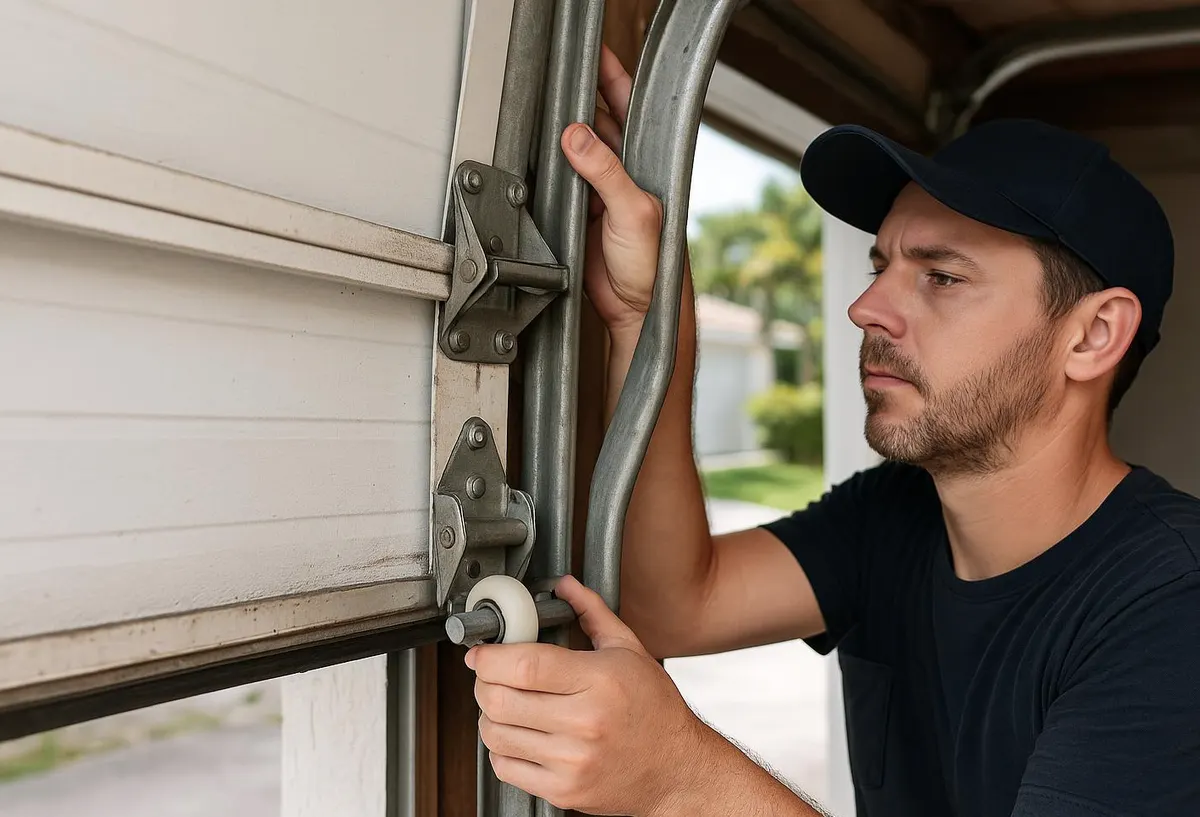
The mistake most people make first is assuming a commercial overhead door is just a bigger, beefier version of the one on their house. It's an easy trap to fall into—both doors roll up, both have springs and tracks, and the guy at the hardware store will happily sell you a residential door in almost any width. If you're outfitting a detached shop, a small warehouse, or a business bay, grabbing a supersized residential door feels like the simple, budget-friendly move. It isn't, and the difference shows up fast once the door starts cycling every day instead of twice.
Why They Look Similar but Aren't
A residential garage door is built around a simple assumption: it opens and closes a handful of times a day, mostly in good weather, for one vehicle. A commercial overhead door is built around a completely different assumption: it might open and close dozens of times a day, every day, in all weather, often with forklifts or foot traffic running underneath it. That difference in use drives almost every design choice.
Steel Gauge and Panel Construction
Commercial doors typically use heavier-gauge steel and more reinforced panel sections. This isn't overkill—it's there to resist dents from equipment, handle more frequent operation without fatiguing, and in some cases meet wind-load ratings that a standard residential door was never designed for.
Springs Rated for Cycles, Not Years
Residential torsion springs are usually rated for a set number of cycles that assumes light daily use, often lasting several years under normal conditions. Commercial applications use high-cycle springs, sometimes paired as dual spring systems, specifically rated for the heavy, repetitive use a business door sees. Putting a residential spring on a door that opens 30 times a day is asking for an early, often dramatic failure.
Openers Built for Duty, Not Convenience
A residential opener is a convenience device. A commercial opener—often a jackshaft or trolley-style operator with a continuous-duty motor—is a workhorse built to run constantly without overheating or burning out. Many also integrate with access control, loop detectors, or push-button stations that residential systems simply don't need.
Track and Lift Configuration
Larger or higher openings often require different track setups entirely—high-lift, vertical-lift, or low-headroom configurations—to clear ceiling obstructions or accommodate taller vehicles. These aren't adjustments you make to a standard residential track; they're a different system from the start.
What This Means for Maintenance in Our Climate
Whichever door you end up with, our wet, mild winters bring the same basic threats: moisture, rust, and the occasional wind or ice event. But a commercial door's heavier use means those threats show up faster and matter more.
- Rust on hardware: With months of rain and damp air, exposed hinges, rollers, and track hardware on a high-use commercial door corrode faster than on a door that barely moves. Regular lubrication matters more here, not less.
- Weatherseal condition: A worn bottom seal lets wind-driven rain into a shop or warehouse, which can damage stored inventory or equipment. On a door cycling constantly, seals wear out quicker and need checking more often.
- Cable and spring fatigue: High-cycle use combined with cold snaps or ice storms puts extra stress on cables and springs. A commercial door's components should be inspected more frequently than a residential door's—not because the parts are worse, but because they're working harder.
- Photo-eye and sensor alignment: Heavier traffic, dust, and splashback from wet pavement can knock sensors out of alignment or dirty the lenses, which matters even more on a door people and vehicles pass under all day.
As a rule of thumb, a commercial door earns a full inspection on a tighter schedule than a residential one—think quarterly rather than once or twice a year—simply because of how much more it's asked to do.
So Which One Do You Actually Need?
If the structure in question is a detached garage or workshop used the way a house garage is used—parking a vehicle, storing tools, opening it a few times a day—a well-built residential door is genuinely fine, and cheaper to install and maintain. If it's a space that functions like a small warehouse, business bay, or anywhere with frequent cycling, equipment traffic, or employees relying on it daily, that's a commercial-grade door and opener, full stop. The upfront cost is higher, but so is the cost of replacing a residential spring system every few months because it was never built for that workload.
When to Call Lynnwood Garage Door Pro
If you're not sure which category your situation falls into, or you've already got a commercial door that's showing rust, sagging seals, or sluggish response from the opener, that's worth a second opinion before it becomes a bigger repair. We handle Garage Door Installation for both residential and heavier-use applications, and our Garage Door Maintenance & Tune-Up service is built around exactly the kind of inspection schedule that high-cycle doors need in a climate like ours—checking springs, cables, rollers, and seals before the wet season turns a small issue into a stuck door.
If you're in Lynnwood, Edmonds, Mountlake Terrace, Shoreline, Bothell, Mill Creek, Mukilteo, or Everett and you need a straight answer about what kind of door your project actually needs, give Lynnwood Garage Door Pro a call. We'll look at how the door will actually be used, not just how big the opening is, and tell you plainly what it needs.